
Why Trading Never Gets Easier — Lessons from 45 Years with Steve Cohen
Dissecting an Interview with a Trading Legend.
I’ve watched this Steve Cohen interview more than ten times. It’s called the Inner Game with Steve Cohen from Stray Reflections. Not just once for content, not twice for insight—but repeatedly, the way traders study their best setups frame by frame. Each replay exposed another layer: how his calm surfaces through chaos, where self-awareness meets instinct, how 45 years of tape reading sharpen rather than dull the edge.
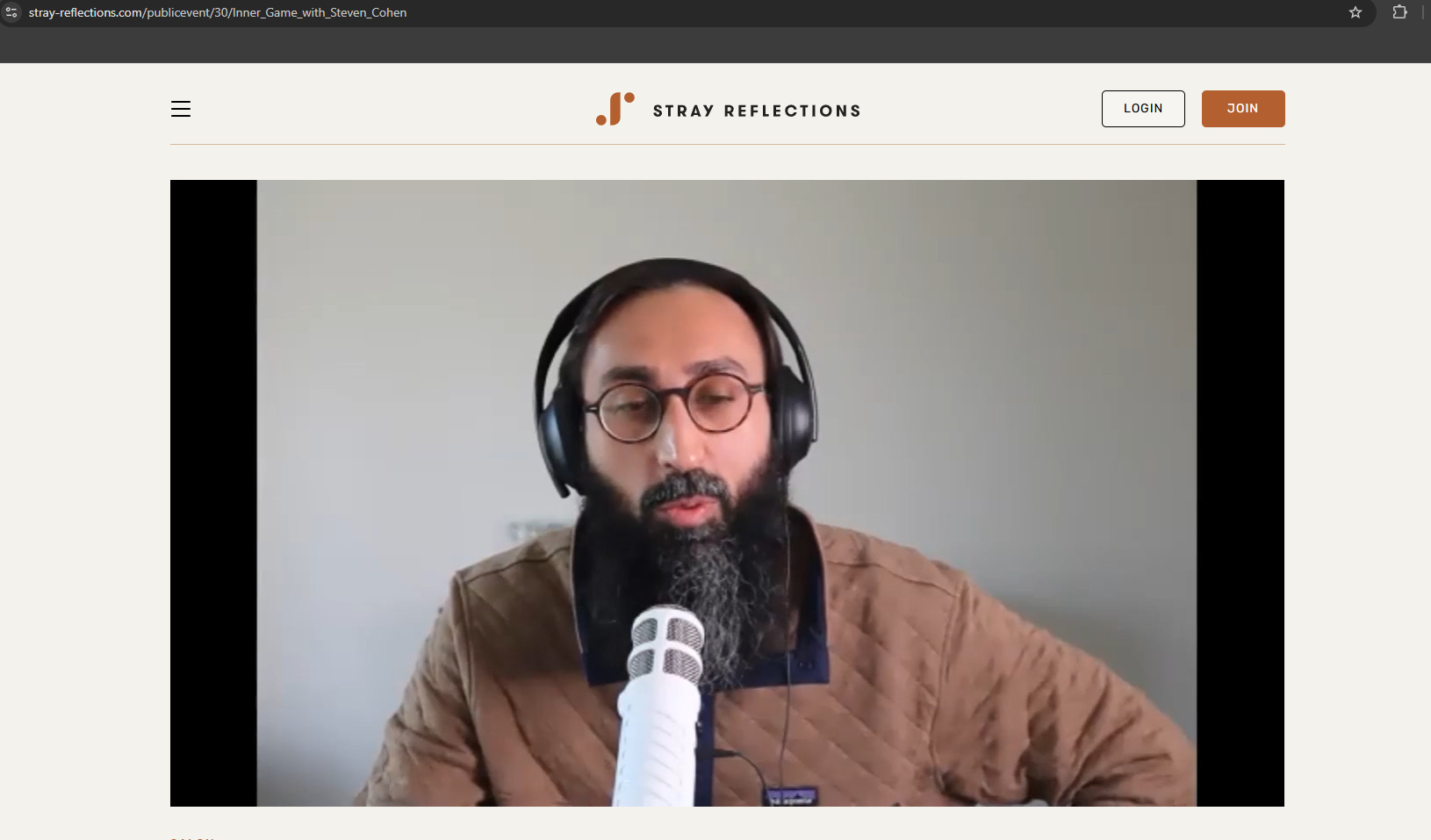
When the interviewer asked Cohen, “When does trading become easier?” Steve didn’t flinch.
His answer: “It doesn’t.”
That line hit me harder than any market lesson ever could.
Because he wasn’t discouraging anyone—he was being honest. Across five decades, he’s lived through every kind of market, every flavor of euphoria and panic, every illusion of mastery that collapses under volatility. Yet the message is clear: you don’t make trading easier—you make yourself stronger.
Through Time at the Tape
What struck me most was how grounded he was in time at the tape. Cohen described having “perspective” only because he’s seen it all: markets crashing, roaring, and rotating through dozens of cycles. The day-to-day doesn’t get easier—it just gets clearer.
He said, “You kind of know that whatever you’re going through at the moment is a moment in time—and things change.” That observation only comes from repetition: living through enough uncertainty to recognize its patterns.
To him, that’s the essence of growth—accumulated experience transforms reaction into perspective. The edge isn’t built on predictions; it’s built on self-regulation.
Even now, with markets faster, more competitive, and more data-driven than ever, he sees the spiritual side of tape reading. You gain calm, not control.
Through time, he learned to be okay losing money. Volatility doesn’t shake him—it activates him. When things heat up, he becomes calmer. In his words, “The more volatile it gets, the more calm I get. I actually enjoy it.”
That’s a thought few can comfortably digest, because the impulse is opposite: volatility triggers fear. Cohen found meaning inside it.
Perspective Matters More Than Perfection
In trading culture, we glorify the breakthrough moments—the A+ setup, the 10R day, the perfect execution loop. But Cohen reframes it brutally:
Stop trying to make trading easier. Make yourself better.
Instead of obsessing over new tricks or automation, focus on where you’ve already made money.
Ask questions:
Where did conviction come from? Was it the chart, the fundamentals, or the tape? What events aligned? Can it be replicated? Or was it luck disguised as skill?
Because if your best trades aren’t measurable and repeatable, they’re noise.
You’re either learning your process—or wasting your time.
He’s seen too many traders spend years “analyzing what they already understand” while ignoring the blind spots that actually cost them. Cohen would rather you identify patterns of error than chase new ones of success.
The Myth of the Morning Routine
Every trader loves asking about routines—wake times, workouts, caffeine habits—but Cohen’s answer strips that myth bare.
He wakes around 6:45 or 7 a.m., spends 30 minutes with his wife watching the news, then sits at his desk by 7:30. No miracle morning. No ice bath or hour-long meditation. His morning briefing comes from his 150 portfolio managers.
But here’s the key insight: your morning routine means nothing unless you know why you need it.
As he speaks, you realize—most traders are trying to copy structure rather than build focus. Cohen’s process works for him because his foundation is built around being ready to think clearly.
For someone managing billions across sectors, that focus comes from communication pipelines. For you or me, it might be a scan of trade setups, a pre-market meditation, or simply eliminating distractions before the bell.
The point: don’t show up until you’re ready. The market doesn’t care about your mood, fatigue, or fear. Carrying emotional baggage into the open is just self-sabotage.
As Cohen implies, preparation isn’t about doing what others do—it’s about knowing what clears your mind. Trading is already hard. Don’t make it harder by showing up foggy.
Why He Never Pulled Away
When asked if he ever detached from the markets, he laughed. “How can I?” His portfolio moves whether he’s watching or not.
But it isn’t addiction—it’s passion. He’s wired to stay engaged. Running a multibillion-dollar portfolio with 1,000 positions isn’t just a job; it’s a lifelong craft.
For day traders, breaks are healthy; for people building something generational, total detachment doesn’t fit. His advice, if you’re serious about leveling up, is implicit: you can pause screens, but you never lose your pulse on the market.
Time off can help you recover—but should never weaken your connection to the field.
